“The first time I dropped below the surface with a camera, I understood immediately that the world I’d been living in was a small fraction of the one that actually existed.”
— Richard Vevers
The advertising years.
Richard Vevers spent a decade at some of London’s most respected advertising agencies, including Saatchi & Saatchi. He learned how to understand audiences, how to build narratives that change minds, and — critically — how to make people care about things they’d never previously thought about. These are not small skills. In the wrong hands they sell cigarettes. In the right hands, they save coral reefs.
But in the late 1990s, advertising felt like a world that was solving the wrong problems. The techniques were sophisticated. The ends were not. Richard found himself increasingly drawn to the natural world — particularly the underwater world he’d discovered as a recreational diver. He began to wonder whether the communication skills honed in advertising could be redirected toward something that actually mattered.
The pivot.
He left advertising to become an artist and photographer, eventually specialising in underwater photography. He ran galleries, designed exhibitions, and built a reputation as someone who could create images that conveyed the beauty and fragility of the underwater world in ways that moved people emotionally, not just aesthetically.
By 2010, he had identified something that troubled him deeply: the tools and techniques for ocean communication were a generation behind those being used for every other major cause. Climate change had Al Gore and powerful visual storytelling. Deforestation had satellite imagery and David Attenborough. Ocean conservation had… not much. Scientists publishing in journals that no one outside academia read. Campaigns that converted existing advocates but failed to reach anyone new.
Richard founded The Ocean Agency to change that.
The Ocean Agency.
The Ocean Agency operated at the intersection of ocean science and strategic communication — using advertising-grade production values, technology partnerships, and media relationships to tell ocean science stories at a scale that scientists alone could not achieve.
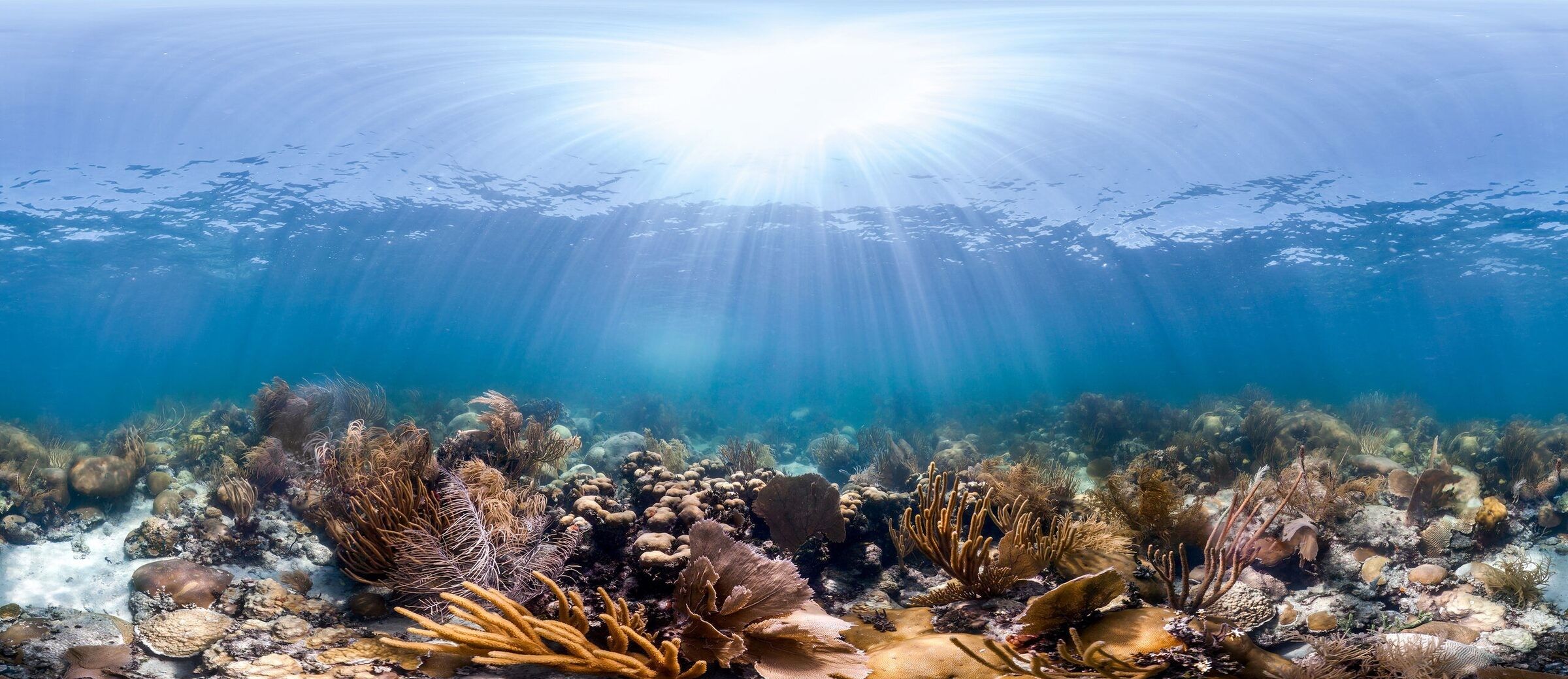
The first major project was the Catlin Seaview Survey: the first comprehensive global scientific survey of the world’s coral reefs. Richard led the project, invented custom 360° underwater cameras, and partnered with Google to bring the imagery to Google Street View — making the underwater world accessible to anyone with an internet connection. The project generated over a billion global views and established the first photographic baseline for reef health that scientists are still using today.
Making the invisible visible isn’t just a communications technique. It’s a conservation strategy. People protect what they can see.
— Richard Vevers
Chasing Coral.
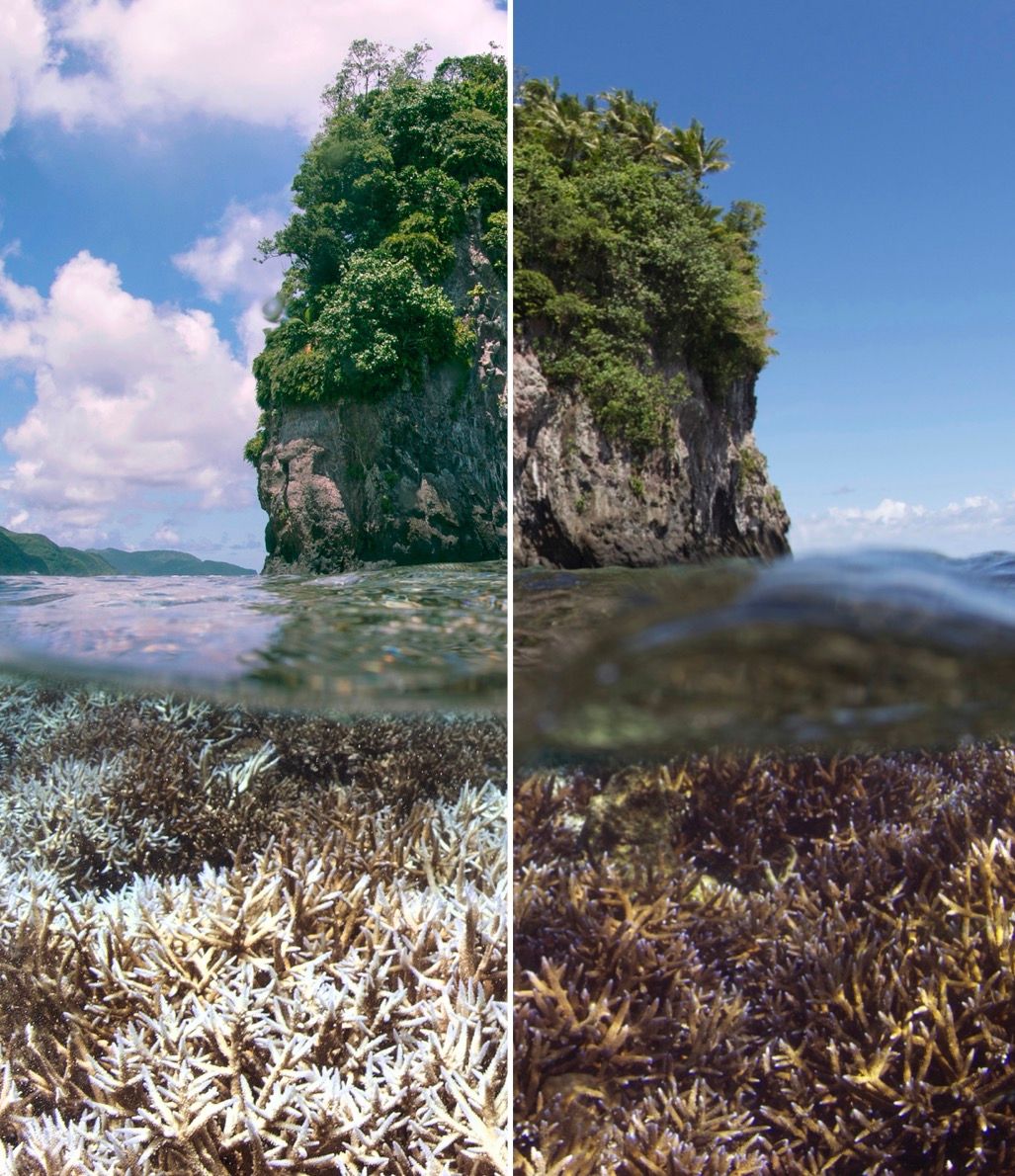
In 2014, Richard began planning something more ambitious. He had been learning about coral bleaching events — the mass die-offs triggered when ocean temperatures rise — and understood that the world had no idea what was happening beneath the surface. The bleaching was catastrophic. It was real-time. And it was completely invisible.
He partnered with documentary director Jeff Orlowski to create Chasing Coral: a film that would follow Richard and a team of divers, photographers, and scientists as they attempted to capture a coral bleaching event on camera in real time. They built new underwater time-lapse camera systems, stationed them on reefs during bleaching events, and — after repeated technical failures and personal setbacks — finally succeeded in capturing footage that had never existed before.
The film premiered at Sundance in January 2017. It won the Audience Award for US Documentary, was acquired by Netflix, and went on to win the Emmy Award for Outstanding Nature Documentary and the Peabody Award. It reached over 100 million viewers and is credited with fundamentally changing public understanding of coral bleaching.
What comes next.
Richard joined Woods Hole Oceanographic Institution — the world’s leading ocean science nonprofit organisation — in 2024 as Director of Room 71, an initiative designed to rethink how ocean science is communicated, not just to the public, but to policy makers, investors, and institutions. The work draws on everything learned from two decades of ocean communication: what works, what doesn’t, and what would have to change for the ocean to receive the attention its scale and importance demand.
The arc from advertising to ocean conservation to WHOI is, in retrospect, completely logical. Every skill developed in those Soho agencies — audience insight, narrative construction, the ability to make people care about unfamiliar things — turned out to be exactly what ocean science needed. The ocean didn’t need better science. It needed better storytelling. And Richard Vevers, by accident of career and deliberate act of will, became one of the people capable of providing it.