The ocean you know is not the ocean that exists.
Ask anyone to describe the ocean, and they'll tell you about beaches, waves, turtles, and dolphins. The holiday postcard version of a world they've stood at the edge of, rarely entered, and almost never thought about beyond that.
That's understandable. The ocean is vast, largely invisible, and — from the perspective of most humans — profoundly remote. We live on land. Our stories, our diets, our economies, our politics all center on the terrestrial 29% of the planet's surface that represents less than 1% of the habitable living space on Earth. The remaining 99%? That's just the world beyond our world.
But here's the problem: that 99% is all-important to life on Earth.
We tend to describe the ocean with tired old facts — how it produces more than half the oxygen we breathe and feeds more than 3 billion people. We think these facts should motivate people to take care of the ocean, not realising these facts don't work at all — they grossly undersell the importance of the ocean by comparing it to our terrestrial world.
Two oceans.
I think of the ocean as two separate entities. There's an ocean we think about, and another we're pre-programmed to ignore — this explains almost everything about why ocean science and conservation has been so hard to advance.
There is the surface ocean: the beaches, the snorkeling holidays, the yacht races. Accessible, beautiful, endlessly photographed. Familiar enough to generate emotion, close enough to feel personal. This ocean gets attention. It has advocates. When a whale washes up on a beach, it trends on Twitter.
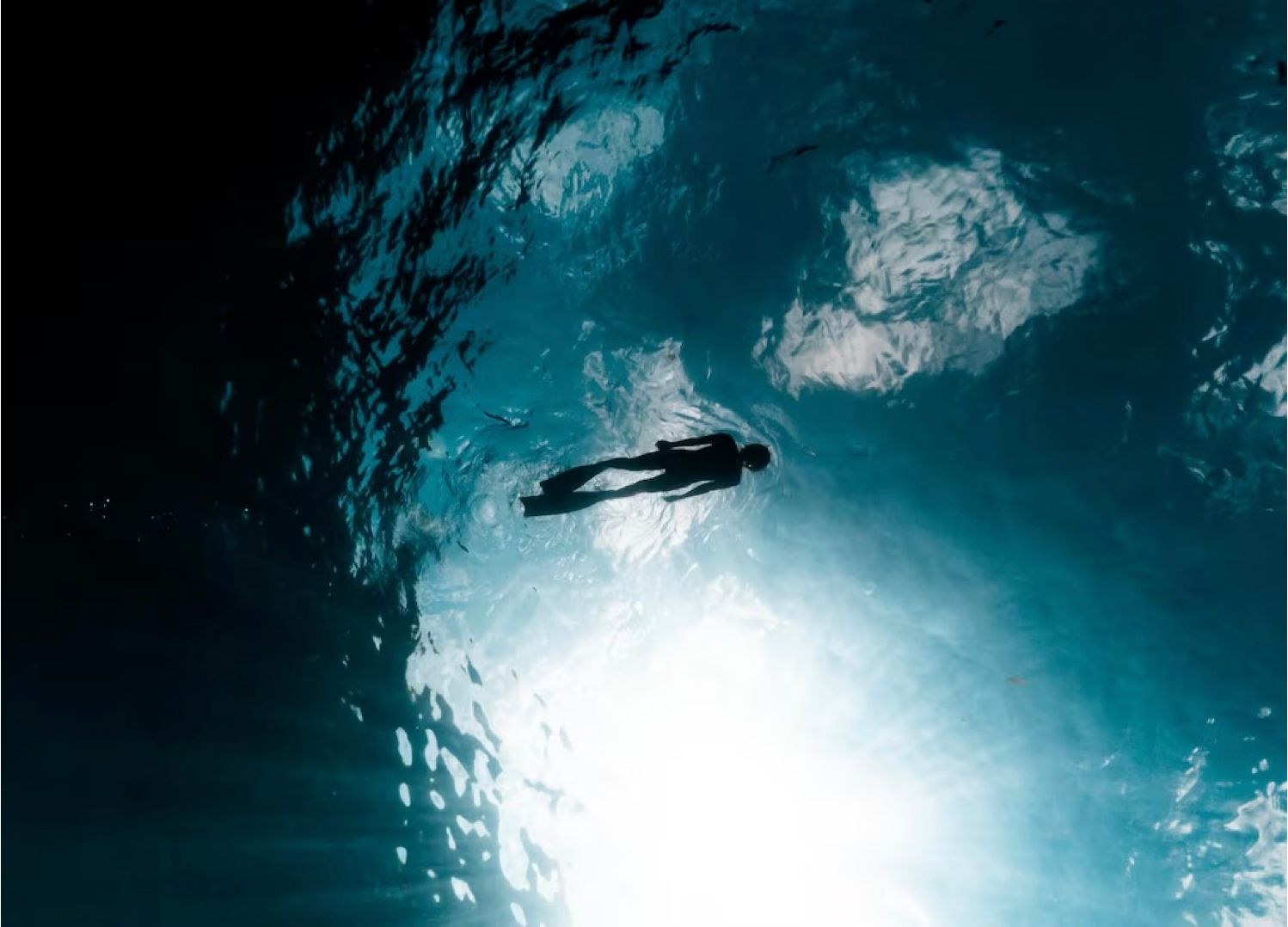
And then there is the deep ocean: a secret ocean beneath the ocean that's vastly different from the ocean above, and largely separated from it, with its own surface and giant waves. This is an otherworldly place that's remarkably difficult to understand. It goes against human nature to think too deeply about it. The imagery we take of it fails to communicate its reality and leaves us with a false impression — it's an extraordinary place, full of extraordinary life that works on a different scale and time. And we're blind to it.
The trouble is, you can't understand the ocean as a whole thinking only about the surface ocean. You can't solve its issues and you can't see the ocean's true importance and potential, or understand how to act.
My career has been an attempt to see the ocean clearly. To bring the deep ocean to the surface. To make the invisible visible enough that people start making decisions — political, financial, personal — as if the ocean matters. Because it does. Arguably more than anything else on Earth.
The ocean is not what people imagine — it's far more complex and extraordinary than people believe. This influences behavior and undermines action. This is a brand issue and fortunately brand issues can be fixed.
The coral canary.
Coral reefs occupy less than 0.1% of the ocean floor, yet they support more than 25% of all marine life. They are the world's most biodiverse ecosystem. They're also the ocean's most visible casualties of climate change. When the ocean warms, coral bleaches. First white, then — if the heat doesn't subside — dead.
I've watched this happen. I've photographed it in real time. I've watched reefs I surveyed in their full, breathtaking colour in 2012 become pale ghost structures by 2016. The Great Barrier Reef lost more than half its coral between 2015 and 2017, and has experienced further mass bleaching events since. The 2016 bleaching event — the worst on record at the time — killed around 30% of the Great Barrier Reef's shallow-water coral in a single year.
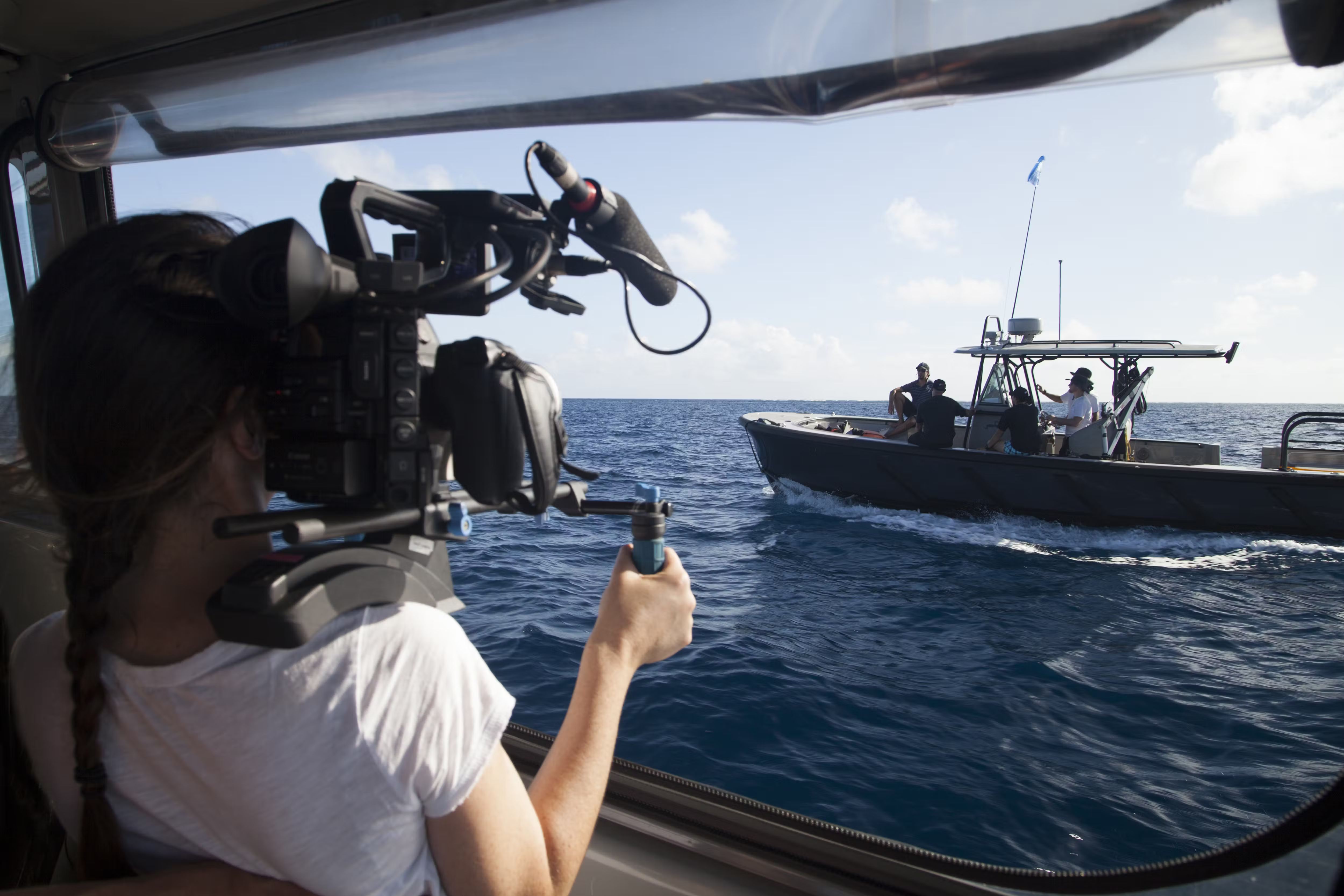
This is the story Chasing Coral tried to tell. We spent three years building underwater time-lapse cameras, stationing them on reefs during bleaching events, and capturing what no one had ever seen before: a coral reef dying in slow motion. The documentary that resulted reached over 100 million people on Netflix. It won the Emmy Award for Outstanding Nature Documentary. And it demonstrated, definitively, that showing people the real ocean — in all its beauty and tragedy — can change how they think and act. But for real progress to be made, people need a deeper understanding of the ocean.
The Ocean Rebrand.
The work I'm now doing at Room 71 in Woods Hole Oceanographic Institution is about what comes next. Chasing Coral was a story. A very good story, I think. But one story, no matter how well-told, does not solve such an enormous challenge — our natural undervaluing of the ocean and the importance of ocean action.
What we need is a fundamental rethinking of how the ocean and ocean science is communicated — not just to the public, but to decision makers, to investors, to governments, to the media that shapes public perception. The ocean needs what I call a rebrand: a shift in the cultural story we tell about it, from backdrop to protagonist. From the blue bit we see from the beach to the system that makes life on Earth possible.
That rebrand isn't just a communications project. It's an infrastructure project. It requires new tools, new partnerships, new channels, new narratives. It requires scientists willing to speak in language that lands. It requires institutions willing to communicate as if the stakes are what they actually are. And it requires storytellers — filmmakers, designers, photographers, communicators — who understand both the science of ocean awareness and the art of disruptive communication.
Ocean (re)introduction.
This is why I've called this essay a reintroduction. Not to the ocean you think you know — the surface, the beaches, the blue — but to the two oceans that actually exist, that make up the 99% of the planet that remains largely unexplored. The two oceans that together support life on Earth and allow it to thrive. The two oceans with unimaginable potential to solve humanity's challenges if we only choose to look.
Welcome to the reality of our ocean world. Whether we choose to understand the ocean or not, our future will be decided by it.